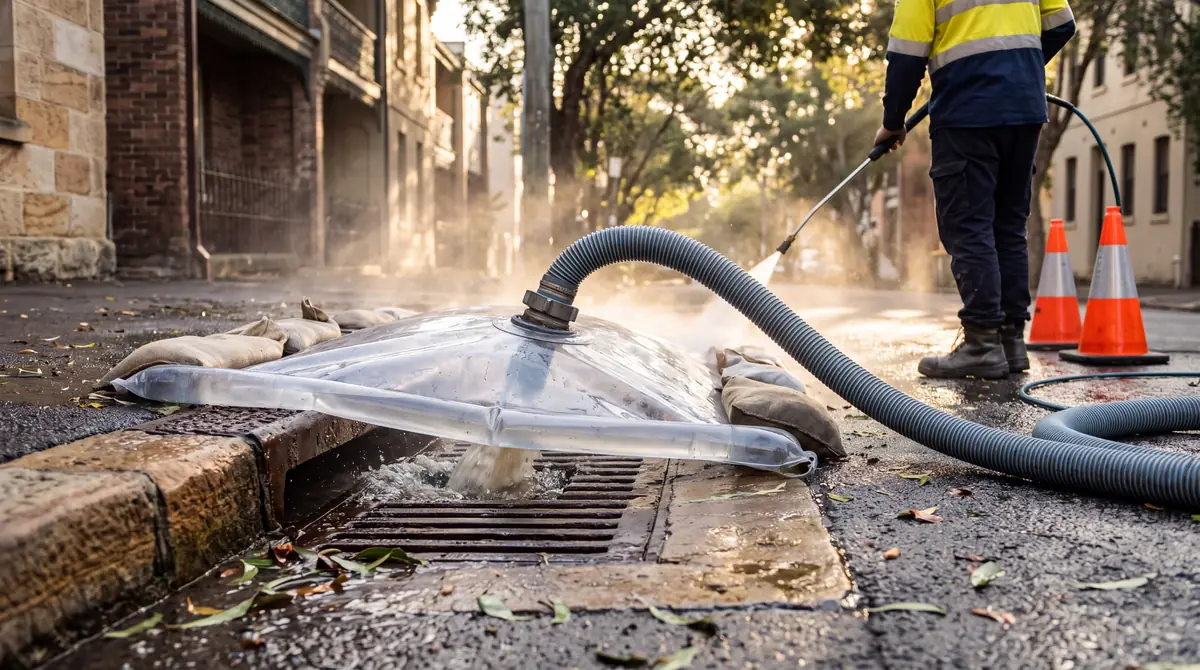
Wash water from a house wash, a pressure-cleaned driveway or a sealed paver job is not allowed to enter the stormwater system anywhere on the Northern Beaches. Stormwater here is not treated: it runs from the kerb inlet straight into Manly, Curl Curl, Dee Why or Narrabeen lagoons, the Pittwater estuary, Middle Harbour, Manly Dam or onto an ocean beach. Northern Beaches Council enforces the NSW pollution laws, and fines apply to whoever lets the water go, which on a cleaning job usually means the contractor and sometimes the owner.
We clean homes and strata buildings from Manly to Palm Beach and out to Duffys Forest every week, and run-off control is the part of the job most owners never see. This guide explains where your property drains, what the rules actually require, what a compliant job looks like on the ground, and the questions to ask any contractor before they turn a tap on.
Why is the Northern Beaches stricter than most of Sydney?
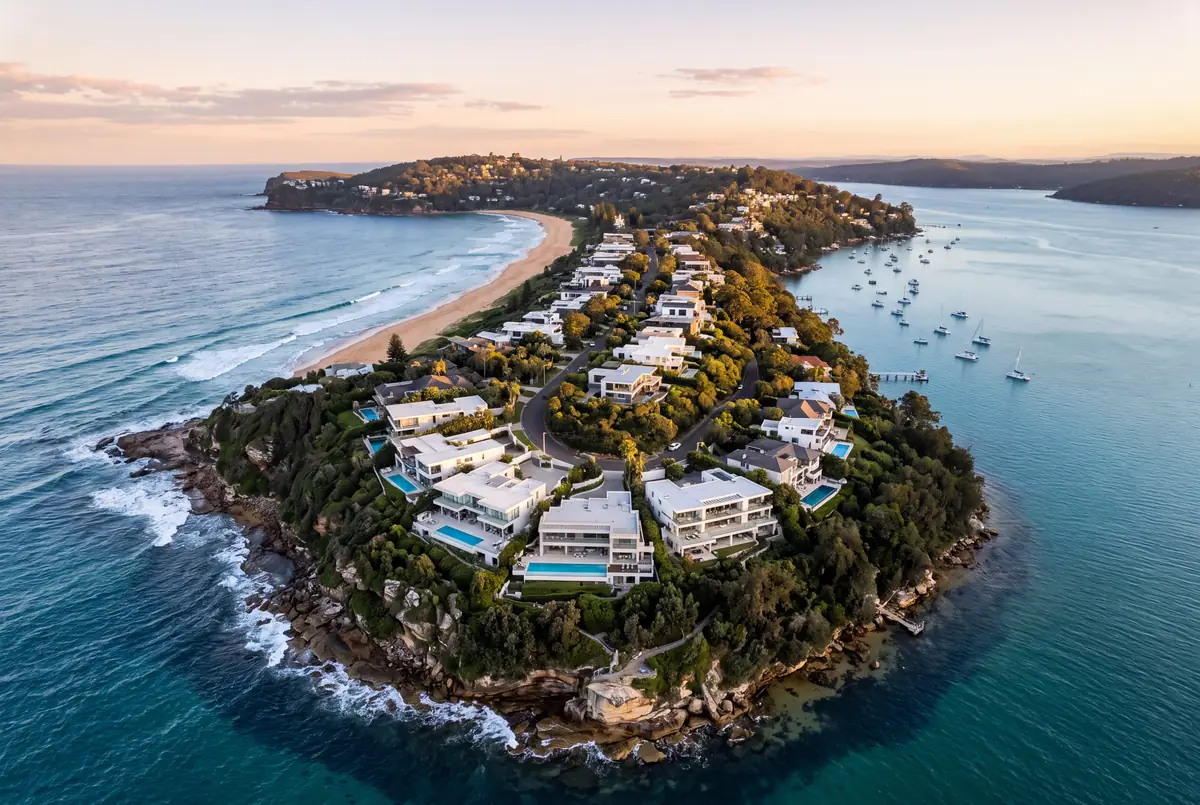
Because almost every street drains somewhere sensitive and close. In much of Sydney a kerb inlet feeds a long concrete channel before it reaches a river. On the peninsula the distance from a driveway to a lagoon, a rock pool or a seagrass bed is often a few hundred metres, and there is nothing in between to dilute or filter what goes in.
The council says so plainly: it has described contaminated stormwater as the biggest source of water pollution on the Northern Beaches. It also acts on it. Council crews dealt with a significant pollution incident at Beacon Hill where a toxic substance was cleaned up before it reached South Creek and Narrabeen Lagoon, and in November 2018 a construction company was convicted and fined in court over a water pollution incident the council investigated.
Three features make the area unusual:
- Four coastal lagoons. Manly, Curl Curl, Dee Why and Narrabeen lagoons are intermittently open to the sea, so pollutants sit in still water for weeks instead of flushing out on the next tide.
- Protected waters. Cabbage Tree Bay Aquatic Reserve at Manly, Long Reef Aquatic Reserve off Collaroy and Dee Why Head, the Dee Why Lagoon Wildlife Refuge and the seagrass beds of Pittwater, including protected Posidonia, are all at the bottom of residential catchments.
- Steep sandstone blocks. On the harbour and Pittwater slopes, water that leaves a terrace does not soak in. It runs over rock straight to the foreshore.
Where does your property drain?
The table below is how we think about the peninsula when we plan run-off control. It is approximate, because catchment boundaries follow ridgelines rather than suburb boundaries, and several suburbs straddle two catchments.
| Receiving water | Suburbs that drain to it (all or part) | How it gets there |
|---|---|---|
| Manly Lagoon | Balgowlah, Queenscliff, North Manly, Manly Vale, Allambie Heights (part) | Burnt Bridge Creek and Brookvale Creek |
| Curl Curl Lagoon | Curl Curl, Freshwater (part), Brookvale, North Manly (part) | Greendale Creek |
| Dee Why Lagoon | Dee Why, North Curl Curl, Cromer, Beacon Hill (part) | Dee Why Creek and South Creek tributaries |
| Narrabeen Lagoon | Narrabeen, North Narrabeen, Collaroy Plateau (part), Elanora Heights, Ingleside, Warriewood, Cromer (part) | Deep Creek, Middle Creek, South Creek, Mullet Creek and Narrabeen Creek |
| Pittwater estuary | Bayview, Church Point, Newport (west), Clareville, Avalon (Careel Bay), Palm Beach (west) | McCarrs Creek, Careel Creek and direct foreshore drainage |
| Middle Harbour | Clontarf, Seaforth, Balgowlah Heights, North Balgowlah, Killarney Heights, Forestville, Davidson, Frenchs Forest, Belrose (part) | Bantry Bay, Middle Harbour Creek and Carroll Creek |
| Manly Dam | Allambie Heights (dam side), North Balgowlah (north), Beacon Hill (west) | Manly Creek headwaters |
| Ocean beaches and rock pools | Manly, Freshwater, Collaroy, Mona Vale, Newport (east), Bilgola Beach, Avalon Beach, Whale Beach, Palm Beach (east) | Street drains and outlets straight onto the sand |
If you want to see your own street, the council publishes catchment and flood information, and the NSW Planning Portal spatial viewer (accessed November 2026) shows flood-planning and coastal hazard layers for any address.
What do the rules actually say?
The legal basis is the NSW Protection of the Environment Operations Act, which makes it an offence to pollute waters, and treats letting anything other than rain enter the stormwater system as pollution. Councils are the regulator for most residential and small business activity, which is why Northern Beaches Council rangers and environmental health officers are the people who respond to complaints.
For a cleaning job that means:
- Wash water containing detergent, biocide, degreaser or sealer must not reach a kerb, gutter or stormwater pit.
- Sediment counts. Dirt, moss, sand and paint flakes lifted off a driveway are pollutants even if no chemical was used.
- Water from commercial and strata car parks, which carries oil, rubber and brake dust, is trade waste and has to be recovered and disposed of lawfully, not hosed down the ramp.
- Penalty notices for water pollution start at around $750 for an individual and $1,500 for a corporation, and prosecutions can lead to far larger court-imposed fines.
None of this stops you having your house washed. Routine exterior cleaning does not need a development application. What it needs is a contractor who stops the water before it leaves the property.
Need this done properly? Request a quote or call 0494 810 609. We cover every suburb from Manly to Palm Beach and west to Duffys Forest.
What does a compliant cleaning job look like on the ground?
On every Northern Beaches job we run the same sequence. It adds 20 to 40 minutes to a typical house and is priced into the quote, not added on the day.
- Walk the fall. Before anything is unloaded we find where water will go: which way the driveway falls, where the nearest kerb inlet is, whether there is a grated pit in the courtyard and whether the garden beds can absorb rinse water.
- Bund the inlets. Kerb inlets and courtyard pits downhill of the work area are covered with weighted drain mats or inflatable bunds so nothing can enter.
- Choose the chemistry for the catchment. We use the lowest effective biocide concentration and, over or beside water, switch to oxygenated cleaners that break down quickly. On decks over Narrabeen Lagoon or a Pittwater jetty, no hypochlorite is used at all.
- Keep the water on the slab. Rotary surface cleaners keep pressure-cleaning water contained under the hood instead of spraying it across the street.
- Send rinse water to garden. On most houses, lawn and garden beds absorb the rinse water and the soil microbes break down the small amount of biocide left in it. Plants are pre-wetted first so they are not stressed.
- Vacuum-recover where there is no garden. Sealed courtyards, strata driveways and car parks are vacuum-recovered into tanks and the water disposed of lawfully.
- Sweep and remove solids. Moss, leaf and sediment lifted off the surface are swept up and bagged, not washed into the gutter.
Special cases on the peninsula
Lagoon-front homes
In Narrabeen, North Narrabeen, Warriewood and around Dee Why Lagoon, homes back directly onto the water. We run absorbent booms along the boundary, work in short sections so the bunds never overflow, and avoid working before forecast rain.
Pittwater waterfronts and jetties
On Pittwater properties in Bayview, Church Point, Clareville and Palm Beach, seawalls, boat sheds and jetties are cleaned with oxygenated cleaners only, timed to the tide, with booms at the water's edge. The seagrass beds here are protected and recover slowly from disturbance.
Strata car parks
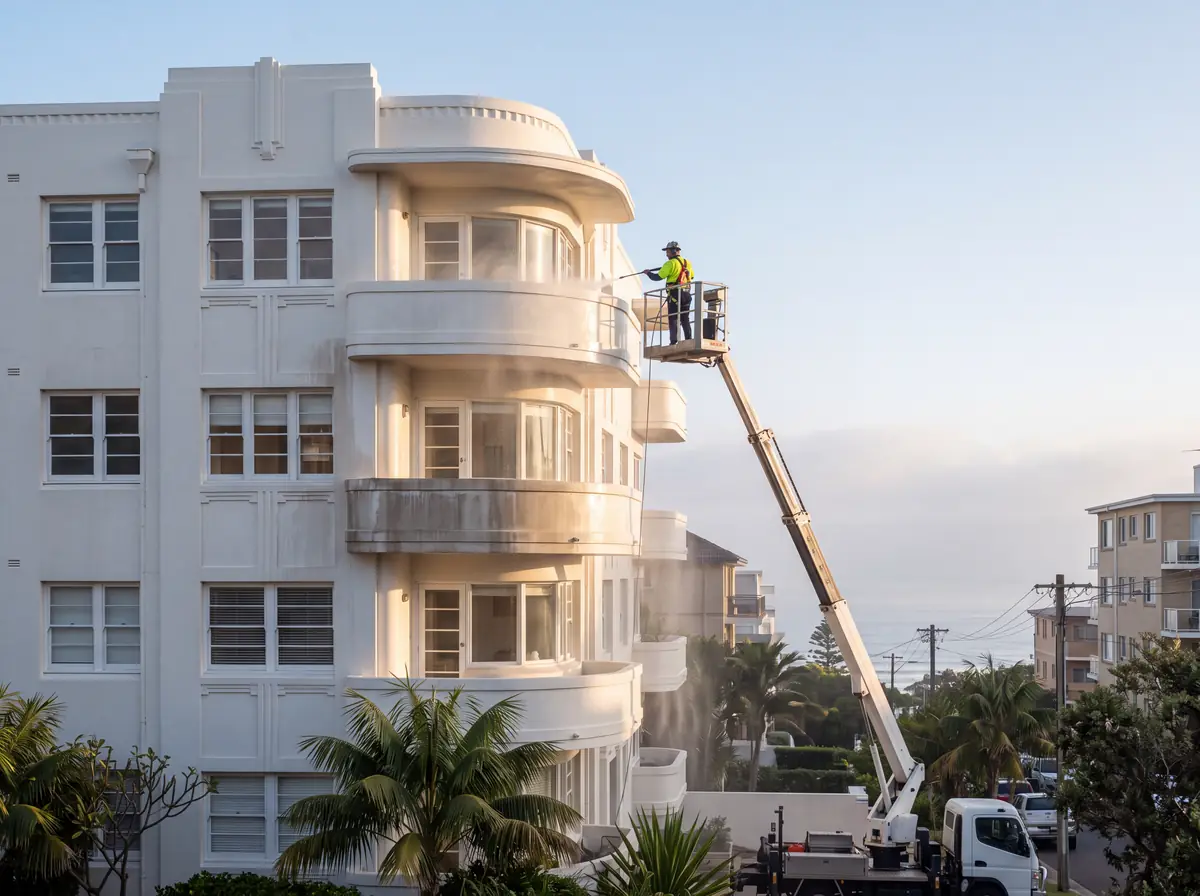
Basement car parks in Dee Why, Manly and Mona Vale are cleaned with hot water and full vacuum recovery, usually overnight. The committee receives a record of volumes recovered and how they were disposed of.
Tank-water properties
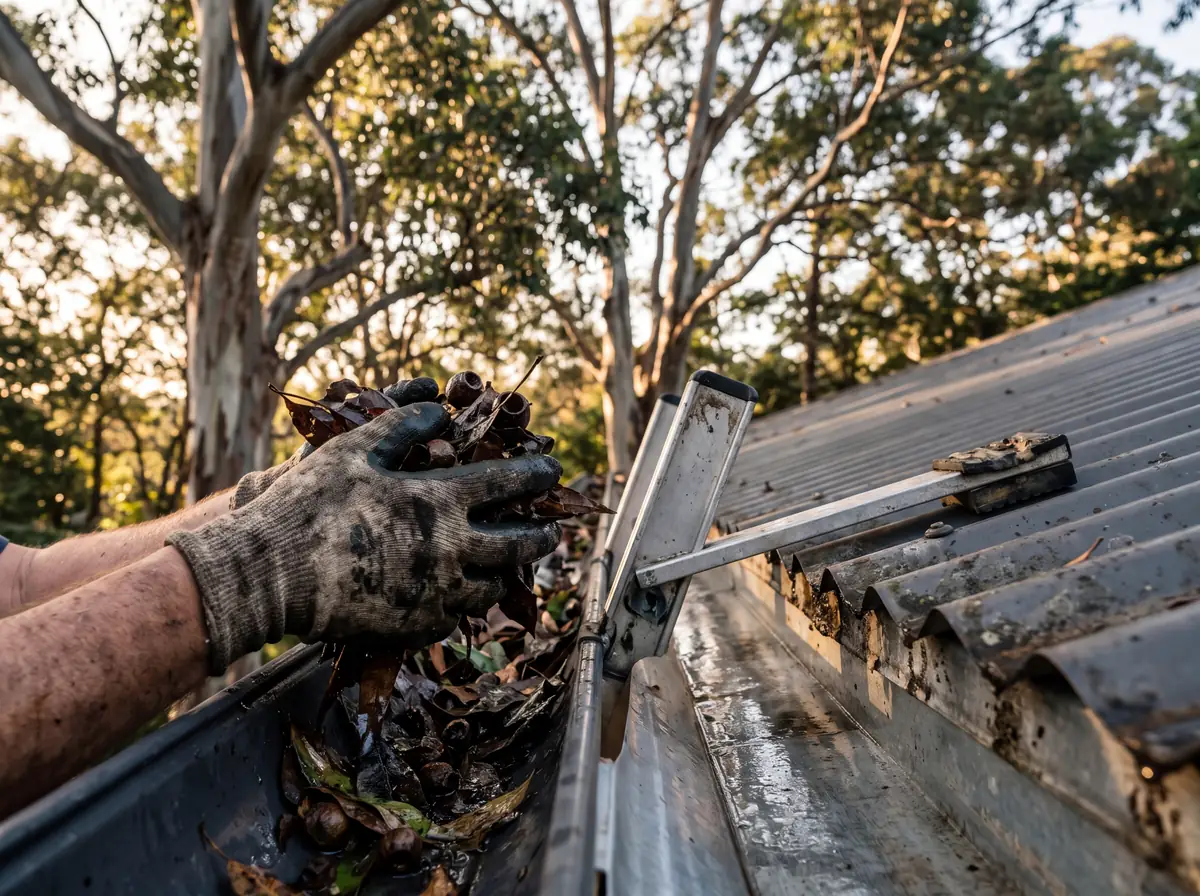
In Duffys Forest, Terrey Hills and Ingleside many homes drink tank water. Roof and gutter work starts by isolating the tank inlets or diverting the first flush, so nothing we use reaches the tank.
Questions to ask any contractor before they start
- Where will the water from this job go, and how will you stop it reaching the kerb?
- What will you use on the walls or paving, and at what concentration?
- Do you carry drain covers and a vacuum recovery unit, or only a pressure washer?
- Who is responsible if a ranger issues a penalty notice?
- Can you show photos of drain protection from a recent Northern Beaches job?
A contractor who cannot answer the first question in a sentence is the one most likely to be hosing your driveway into the gutter. The cheapest quote on the peninsula is often cheap because this part has been left out.
What chemistry do we use near Northern Beaches waterways, and why?
Most exterior cleaning on the peninsula is biological: mould, algae, lichen and moss. The products that kill them are effective at low concentrations, which is what makes run-off control workable.
| Product type | Where we use it | Why it suits the catchment |
|---|---|---|
| Sodium hypochlorite, 0.5 to 4 percent | Render, painted brick, cladding, concrete away from water | Breaks down to salt and water quickly, especially in soil and sunlight |
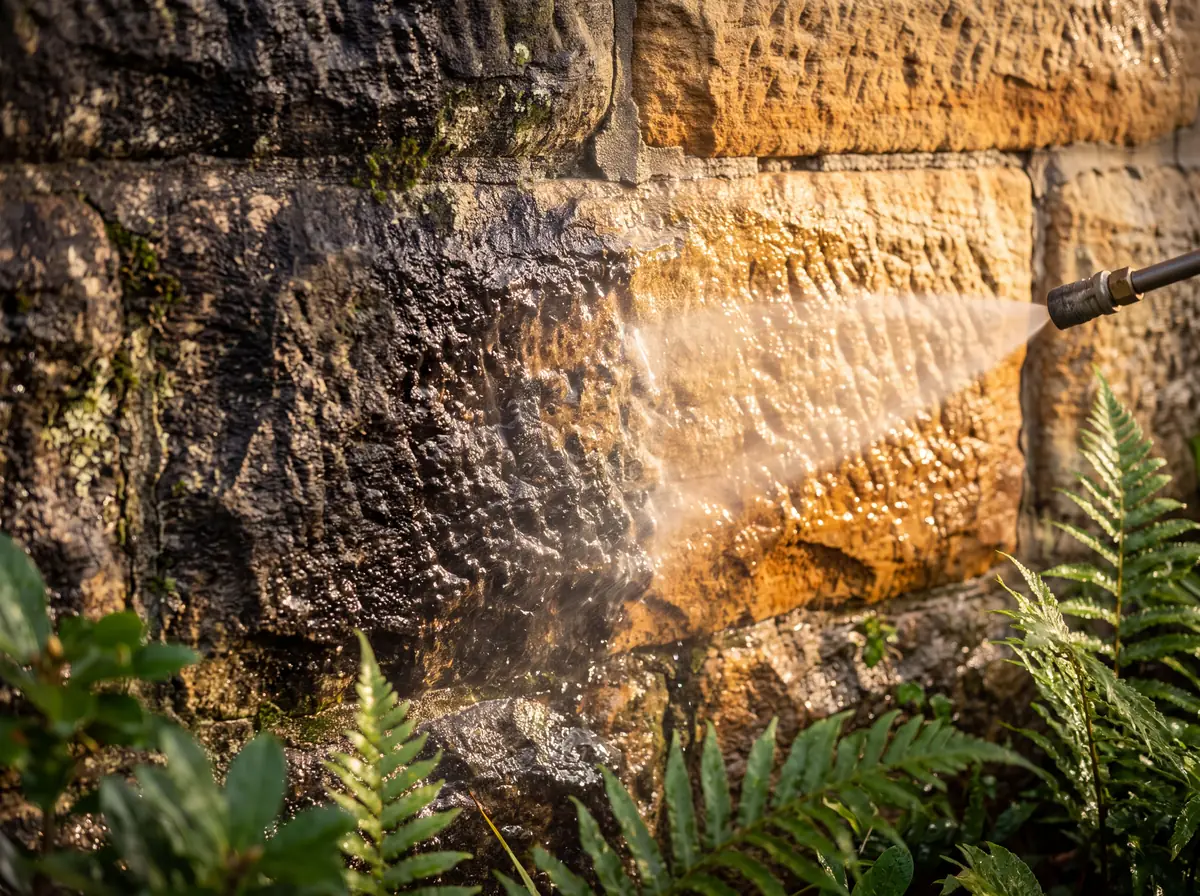
| Quaternary ammonium biocide | Sandstone, pavers, retaining walls | Effective at low dose, binds to soil and is broken down there rather than travelling |
| Oxygenated (percarbonate) cleaner | Timber decks, jetties, anything over or beside water | Releases oxygen and soda ash, no chlorine by-products |
| Alkaline stone cleaner | Limestone, travertine, pool surrounds | Acid-free, neutralised before rinse, does not etch stone |
| Hot water only | Driveways, car parks, oil and gum | Heat does the work; detergent kept to pre-treatment spots |
What we do not use near drains or water: acid washes on paving or stone, solvent degreasers that cannot be recovered, and film-forming sealers sprayed where overspray can reach a gutter. Acid in particular lowers the pH of anything it reaches and dissolves the calcium in concrete and limestone, so it is a poor choice for both the surface and the lagoon.
Timing and weather
Rain is the enemy of run-off control. A summer storm arriving mid-job overwhelms drain covers and carries everything on the driveway to the kerb. We watch the forecast for every Northern Beaches booking and move jobs when heavy rain is due within a few hours of finishing, particularly on lagoon-front properties and steep Pittwater blocks. We also avoid applying biocide in direct midday sun on hot days, which dries it before it works and tempts a stronger mix.
How a typical lagoon-front house wash runs
Here is how we usually approach a two-storey rendered home backing onto Narrabeen Lagoon, the kind of property where every litre matters.
- Before the day: the quote names Narrabeen Lagoon as the receiving water and lists the drain points we will protect. We check the tide and the forecast.
- Setup: the street-side kerb inlet and the courtyard pit are bunded; absorbent booms go along the rear boundary to the lagoon reserve.
- Walls: biocide at the lowest strength that clears a test patch, applied one elevation at a time so it never dries, and rinsed at under 500 psi onto the lawn rather than the paved path.
- Hard surfaces: the driveway is cleaned with a rotary surface cleaner and the water vacuum-recovered, because there is no garden between it and the kerb.
- Finish: booms and bunds are lifted only after the surfaces have stopped dripping, solids are bagged, and the photo report shows the drain protection as well as the result.
The whole run-off routine on a home like this adds about half an hour. Skipping it saves the contractor time and moves the risk to the lagoon and to you.
What to do next
Look at the nearest kerb inlet to your driveway and follow where it goes on a map. Then book a house wash or pressure clean with run-off control written into the quote. Every one of our Northern Beaches quotes names the receiving water for your property and how we will protect it, and you can see the conditions for your suburb on the Northern Beaches page.
Related: House Washing Northern Beaches, Pressure Cleaning Northern Beaches, Car Park Cleaning Northern Beaches, Northern Beaches service area.